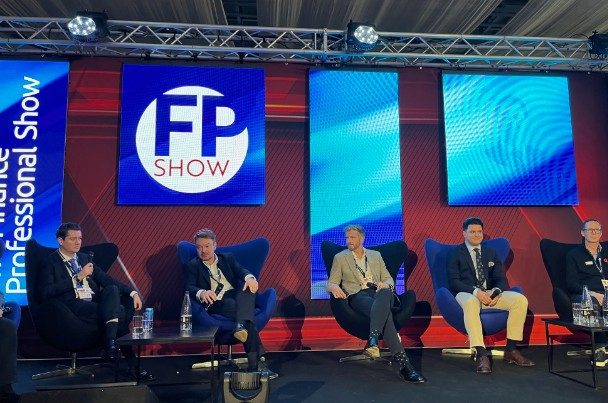
At London’s Finance Professional Show panellists focused on trends in the development finance market, from the impact of stabilised interest rates on development enquiries to the appetite for conversions and smaller development units.
The panel consisted of Lee Francis, head of origination at CapitalRise, Lee Merrifield, credit and underwriting director at MSP Capital, Matthew Blaine, head of origination at Atelier, Christopher von Strandmann, partner and head of banking at Harold Benjamin, Adam Butler, sales and marketing director at Avamore Capital, and Miz Herrera, director of operation at Salboy Capital.
While many on the panel felt that developer confidence was high, some were cautious over the ease and swiftness of converting enquiries into business. An audience poll revealed a ‘slight rise’ in developer enquiries, with interest rate stabilisation a major factor, amid market instability and global uncertainties.
According to the panel, the main concerns for their SME developer clients when sourcing finance were valuation hurdles and cashflow for staged funding. Matthew Blaine advised developers – especially first-time – to “plan their cash flow carefully, considering all costs and sales projections with your broker and lender.”
The panel also brought up innovative construction methods, such as offsite and modular building, as ways to manage costs and improve efficiency.
Following an audience question about moving from BTL to a first-time developer, the panel was in broad agreement over the importance of “realistic cost projections” (Adam Butler) and having a professional team in place, “Walk before you run; begin maybe with smaller units, a refurbishment or a conversion,” added Adam.
Finally, with lenders showing increased appetite for conversion projects – such as office to residential, or unused commercial spaces – the panel highlighted the challenge of technical complexity, unseen renovation costs and potential sensitivity around protected buildings.
Adam Butler noted that issues such as these can delay projects so much that developers can often walk away. Speaking to the right planners for conversions and ground-up developments was essential to make use of this appetite, the panel agreed.